How Infrared Vein Finders Reduce Needle Stick Attempts
Author
Conwell Team
Published
April 8, 2026
Routine peripheral intravenous catheter (PIVC) insertion is the most common invasive clinical procedure. Yet, despite its frequency, the failure rate remains consistently high.
According to research published in the Journal of Infusion Nursing, the failure rate for first-attempt peripheral IVs can range from 35% to 50% in specific patient populations. Every missed attempt is not just a clinical challenge—it directly translates to wasted medical supplies, decreased nursing efficiency, and lower patient satisfaction scores (HCAHPS).
For modern hospitals and proactive medical equipment distributors, investing in an Infrared Vein Finder is no longer a luxury; it is an essential operational upgrade.
Here is a comprehensive guide to understanding the clinical value of vein visualization technology and how to select the right equipment for your facility or distribution portfolio.
The True Cost of “Blind” Venipuncture
Before discussing the solution, it is crucial to understand the financial and clinical burden of difficult venous access (DVA). When nurses rely solely on visual inspection and palpation, complications arise:
- Increased Supply Costs: Multiple attempts mean more wasted catheters, prep pads, and dressings.
- Time Inefficiency: A difficult stick can take up to 30 minutes and often requires escalating the task to senior vascular access specialists.
- Patient Trauma: Repeated needle sticks cause anxiety, especially in pediatric and geriatric patients, directly impacting the hospital’s reputation.
How Near-Infrared (NIR) Technology Works
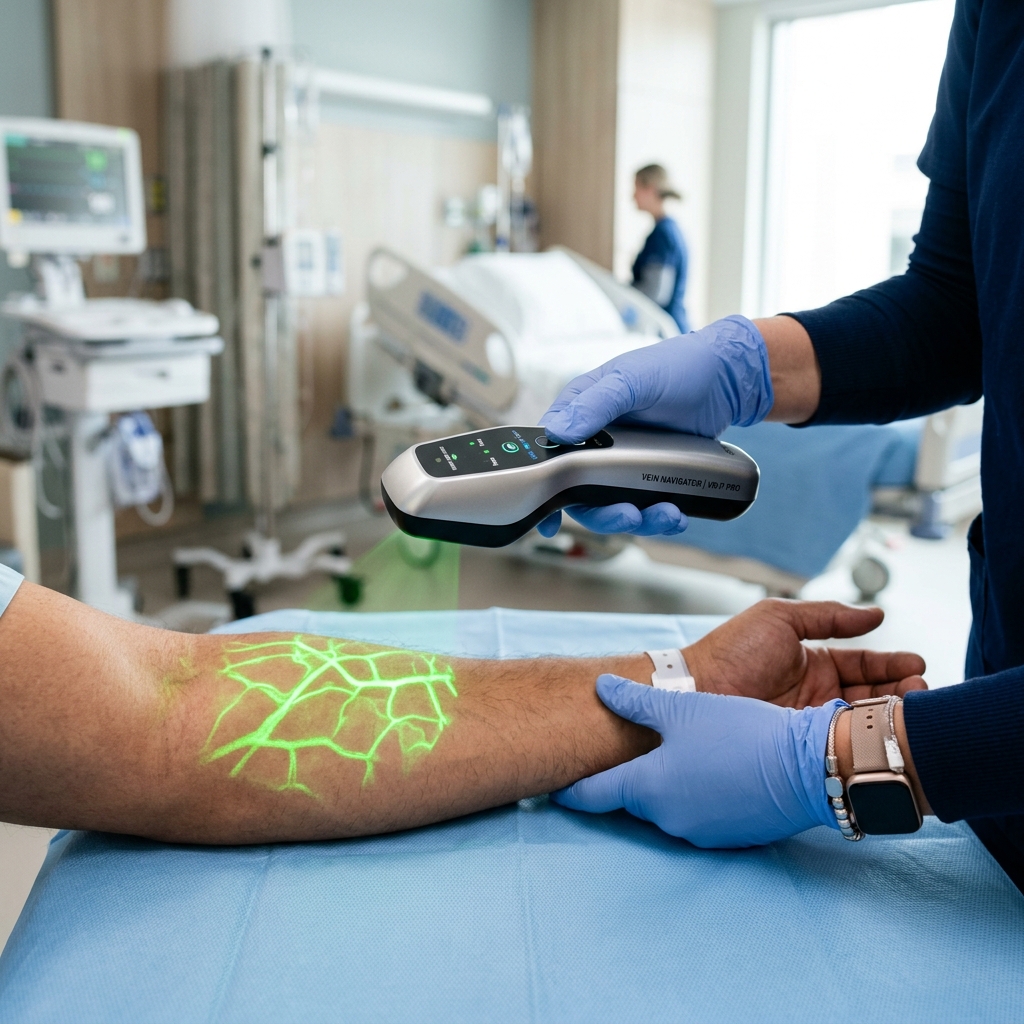
The working principle of an infrared vein finder is highly reliable and non-invasive. The device emits safe near-infrared (NIR) light onto the patient’s skin. The hemoglobin in the deoxygenated blood within the veins absorbs this infrared light differently than the surrounding tissue.
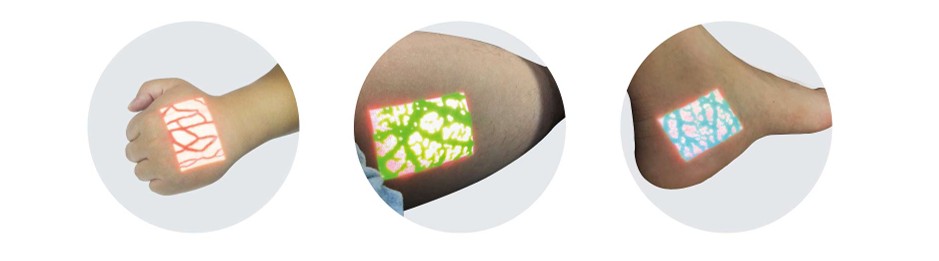
The device captures this difference and projects a real-time, high-definition vascular map directly onto the skin surface. This allows healthcare professionals to accurately locate superficial veins, assess their patency, and select the optimal puncture site.
High-Value Clinical Applications
While beneficial across all departments, vein illuminators deliver the highest Return on Investment (ROI) in specific scenarios:
- Pediatrics (NICU & PICU): Infants have high subcutaneous fat and small, fragile veins. Vein finders significantly reduce the anxiety of both the child and the parents.
- Oncology: Chemotherapy often leads to venous depletion and collapsed veins. Visualization technology prevents further vascular damage.
- Geriatrics: Elderly patients often suffer from rolling veins or poor skin elasticity.
- Darker Skin Tones & Obesity: Melanin and adipose tissue make veins invisible to the naked eye. Advanced vein finders with adjustable color modes can bypass these barriers.
2026 Buyer’s Checklist: How to Choose a Quality Vein Finder
If you are a hospital procurement manager or a B2B distributor, not all vein finders on the market offer the same value. Here are the core criteria to evaluate:
- 1. Color and Imaging Modes: One color does not fit all. Different skin tones and ambient lighting conditions require different projections. Look for devices like the Conwell Medical CW-VF-01, which offers 5 distinct color modes to accommodate diverse patient demographics.
- 2. Non-Contact Design: Infection control is paramount. A hand-held, non-contact design ensures the device never touches the patient, eliminating the risk of cross-contamination.
- 3. Portability and Battery Life: Nurses need devices that can easily move from room to room. Lightweight, hand-held units with long-lasting rechargeable batteries are highly preferred over bulky alternatives.
- 4. Global Certifications: Never compromise on compliance. Ensure the manufacturer holds international quality system certifications. The CW-VF-01, for instance, is fully backed by CE, FDA, and ISO 13485 certifications, ensuring seamless market entry and clinical safety.
Partnering with the Right Manufacturer
For medical distributors, sourcing a reliable product is only half the battle; partnering with a supportive manufacturer is the other.
At Conwell Medical, we designed the CW-VF-01 Infrared Vein Finder not only for clinical excellence but also for commercial success. We support our global partners with:
- Flexible MOQ: Start with a Minimum Order Quantity as low as 5 units.
- Competitive Margins: Manufacturer-direct pricing ensures maximum profitability for distributors.
- Fast Lead Times: Keep your supply chain moving with efficient manufacturing and delivery.
Ready to upgrade your clinical equipment or expand your distribution catalog?
👉 Request a Wholesale Quote for the CW-VF-01 Today
Frequently Asked Questions (FAQ)
Do infrared vein finders work?
Yes, they are highly effective clinical tools. As described in our Product Introduction, the vein finder helps medical staff find a vein’s location quickly and accurately. By displaying a vivid vein map directly on the skin, it significantly reduces the number of needle stick attempts, which improves nursing efficiency and enhances the patient experience, especially in challenging clinical cases.
Can you use infrared to find a vein?
Absolutely. The technology works on a sophisticated scientific Principle: the device projects near-infrared light onto the skin, which is absorbed by the hemoglobin in the blood and reflected by the surrounding tissue. This information is captured, processed, and projected digitally in real-time directly onto the surface of the skin. This provides a real-time, accurate image of the patient’s blood pattern that is otherwise invisible to the naked eye.
Are vein finders FDA approved?
Yes, medical-grade vein finders must meet strict regulatory standards for hospital use. The Conwell Medical CW-VF-01 is a fully compliant medical device, holding essential global certifications including FDA registration, CE marking, and ISO 13485. For B2B distributors and healthcare facilities, this ensures that the equipment is safe, reliable, and meets international quality requirements for clinical practice.
References for Further Reading:
- Helm, R. E., et al. (2015). “Accepted but Unacceptable: Peripheral IV Catheter Failure.” Journal of Infusion Nursing. Available on PubMed
- Infusion Nurses Society (INS) - Standards of Practice for Vascular Access.